
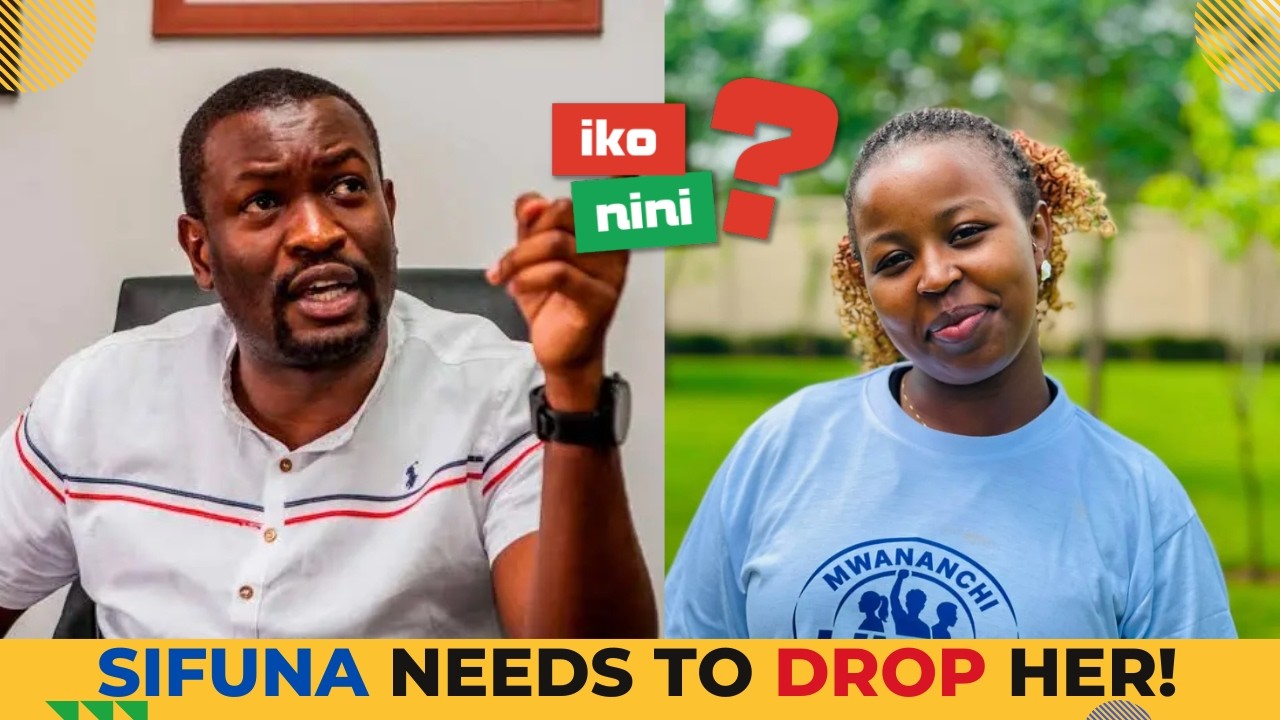
“I am three months pregnant for Sifuna, I told him akaniblock.”-Charity Waweru now wants Kenyans to intervene
A dramatic personal claim involving Charity Waweru (aka.GEN Z Baddie)and Sifuna would inevitably attract significant public attention in Kenya, particularly if it appeared on social media alongside demands for members of the public to intervene. In the case presented here, Waweru allegedly tells Sifuna that she is three months pregnant and says she warned him against blocking her.
Gen Z baddie claims she has been exchanging saliva with the right Hon. Sifuna ever since they started Linda Mwanainchi rallies and he has been inspecting her serves after the rallies.
The language is emotionally charged, personal and deliberately attention-grabbing. Such a statement could quickly move from a private dispute into a public conversation, especially in an environment where social media users frequently share screenshots, short videos and sensational headlines without establishing the underlying facts.
Yet the case also raises an important question: how should the public respond when a serious personal allegation involving identifiable people begins circulating online?
The most responsible approach is to separate an allegation from an established fact. A statement attributed to one person does not automatically establish that the underlying events occurred. Similarly, a viral post, screenshot or video clip may lack the context needed to understand what happened before or after the material was published.
Such wording can encourage readers to choose sides before they know whether the allegation is authentic. Supporters may sympathize with the person making the claim, while others may defend the person accused. Within hours, a private disagreement can become a public argument involving thousands of people who have never met either party.
A responsible article should distinguish between what someone is alleged to have said, what can independently be established, and what remains unknown. This distinction is especially important when the subject involves pregnancy, relationships, parenthood or other highly personal matters.
Waweru’s appeal for Kenyans to intervene creates another layer of public interest. When someone asks strangers to become involved in a personal dispute, people may feel compelled to investigate, comment or demand answers.
However, public involvement should not become harassment. If a claim has not been independently verified, social-media users should avoid presenting it as an established fact. They should also avoid publishing private telephone numbers, addresses, photographs obtained without permission or other personal information in an attempt to force a response.
Even when a story becomes widely discussed, responsible readers should resist the temptation to amplify unverified accusations simply because they are emotionally compelling.
Claims involving pregnancy deserve especially careful treatment because they concern sensitive personal information. In real journalism, a publication should not casually convert an individual’s statement about a pregnancy into proof of the pregnancy itself, much less use that allegation to establish paternity.